


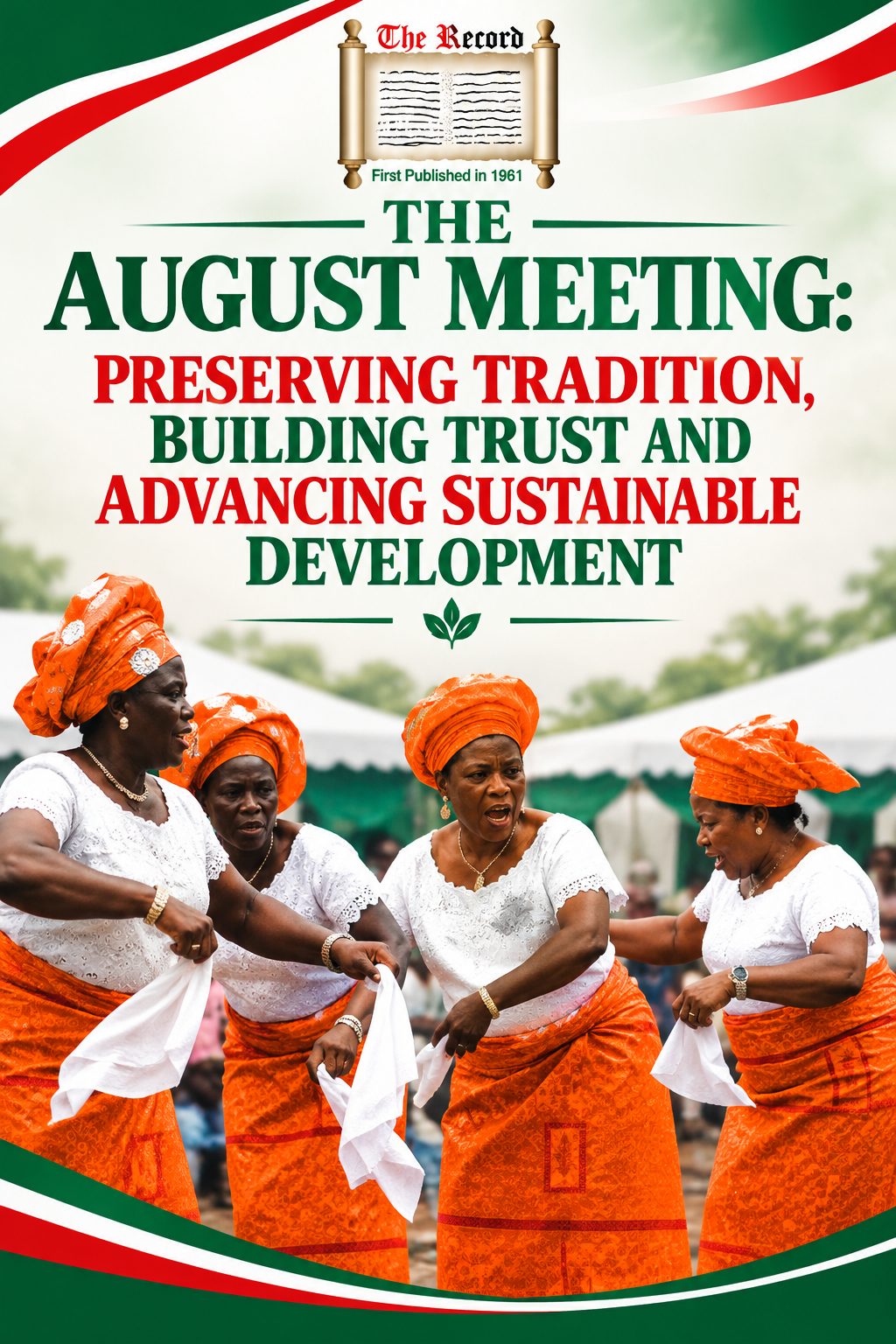
Every tradition survives because it adapts. The August Meeting has remained one of the most respected cultural institutions in Nsukka, not simply because it celebrates heritage, but because it gives women a voice in community affairs. Today, however, preserving that relevance requires more than maintaining old customs. It requires embracing conversations about effective communication, strengthening public trust, and promoting sustainable energy.
For generations, the August Meeting has served as a platform where women deliberate on issues affecting their communities and work together to find practical solutions. From education and healthcare to security, infrastructure, and social welfare, many ideas that have transformed communities were first discussed at these gatherings. This is proof that culture is not only about preserving traditions; it is also about creating opportunities for development.
None of these achievements would have been possible without effective communication. The strength of the August Meeting lies in its ability to bring people together, encourage dialogue, and build consensus. When people are free to express their opinions and leaders are willing to listen, better decisions are made. Communities thrive when communication is open, honest, and inclusive.
Development cannot succeed where people have lost confidence in their leaders or feel excluded from decisions that affect them. The August Meeting has endured because it gives women a sense of belonging and ownership. Hence, public trust is essential. The trust built through years of dialogue has made it easier for communities to unite behind projects that improve their collective welfare. This spirit of transparency and participation should be protected and strengthened.
One issue that deserves greater attention during the August Meeting is sustainable energy. Across many communities in Nsukka, unreliable electricity continues to affect businesses, schools, health centres, and even cultural activities. While governments and development partners promote renewable energy solutions such as solar power and mini-grids, these projects can only succeed when people understand their benefits and are willing to support them. The August Meeting already commands respect and attracts wide participation. It is, therefore, an ideal platform for educating residents, addressing concerns, and building public support for sustainable energy initiatives.
The world is changing rapidly, and cultural institutions cannot afford to remain static. Holding on to tradition does not mean ignoring present-day realities. Instead, it means allowing our traditions to respond to new challenges while preserving the values that define us. The August Meeting should continue to celebrate our heritage, but it should also become a forum where ideas about development, innovation, and community progress are freely exchanged.
Therefore, we urge traditional rulers, community leaders, women’s associations, local government authorities, and relevant agencies to make better use of the August Meeting. Rather than seeing it as only a cultural celebration, they should recognize it as a trusted platform for discussing issues that affect everyday life. Such conversations will not only strengthen communities but also ensure that development efforts enjoy the understanding and support of the people.
Culture is not preserved by standing still; it survives by responding to the needs of every generation. If the August Meeting is to remain one of Nsukka’s greatest cultural assets, it must become more than an annual gathering. It should be a platform where ideas are exchanged, trust is strengthened, and solutions to challenges such as sustainable energy are openly discussed. That is how tradition remains relevant, not by resisting change, but by leading it.