


By Peter Okoye
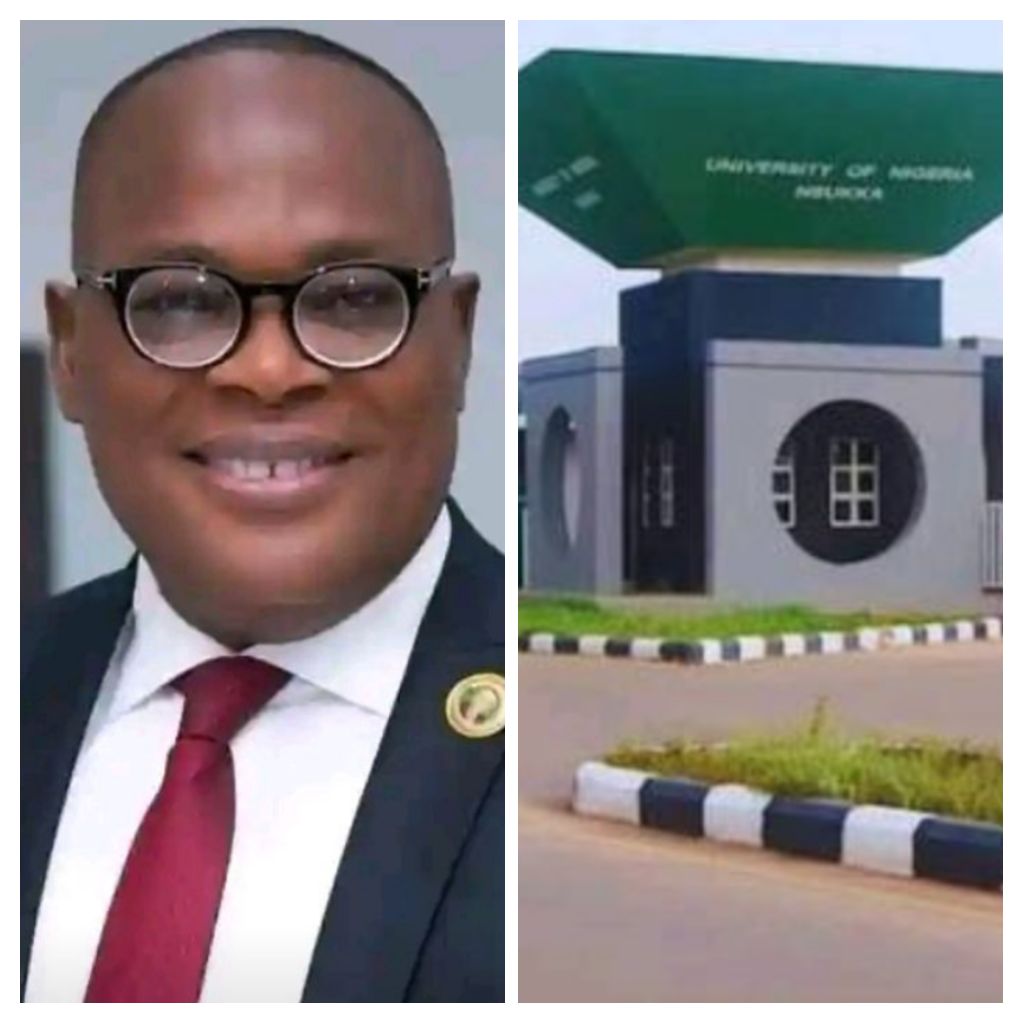
The recent circulation from the office of the Registrar announcing the hoisting of key institutional policies on the UNN website (unn.edu.ng) may appear routine on the surface, but in reality it represents something far deeper. The Unversity of Nigeria is undergoing a quiet, yet strategic attempt to rebuild institutional culture under the leadership of Professor Simon Uchenna Ortuanya.
For months, the University has remained under intense public scrutiny. Social media platforms, alumni forums, blogs and public commentary spaces have repeatedly drawn attention to the declining standards and years of accumulated decay within Nigeria’s premier indigenous university. The conditions of some hostels, classrooms, and infrastructure were pointed out.
In many cases, attempts by university spokespersons and defenders to contextualize the situation were dismissed as public relations spin-doctoring or institutional image laundering. The backlash was often fierce and emotional, especially after some isolated hostel images circulated widely online.
Yet, amid the noise, many critics overlooked a number of crucial realities
Criticism of public institutions often revolve around reality and opposition politics of seeing only the bad things. Critics often ignore reform efforts.
At his inauguration as the 16th Vice-Chancellor in August 2025, Prof. Ortuanya openly admitted that the institution required urgent transformation. During that address, he unveiled what observers described as an ambitious “Transformative Agenda” aimed at repositioning UNN as a globally competitive, research-intensive and entrepreneurial university. Rather than offering simplistic reassurances, he framed the university’s condition as the cumulative outcome of long-term institutional decline requiring systematic rebuilding.
Again, during discussions surrounding his first 100 days in office, the administration publicly acknowledged that UNN had been weighed down by “years of infrastructural decay, administrative inertia, and declining community confidence.” That admission alone was significant because it departed from the defensive institutional culture that often characterizes public universities under criticism.
Beyond rhetoric, tangible efforts have already begun to emerge
Across the Nsukka campus, road rehabilitation projects have become visible signs of movement after years of neglect. Reports indicate that over 4.5 kilometres of strategic roads, including Elias Avenue, Zik’s Drive, Chitis/Alumni Road, Main Gate Road and the VC’s Office Road, have either been rehabilitated or are undergoing reconstruction. Hostel rehabilitation has also moved from mere promises to visible action. Renovation plans for aging hostels have commenced, while new hostel blocks for Pharmacy and Nursing students at Ituku-Ozalla are already being developed. The administration has additionally established a Housing and Accommodation Directorate to confront the long-standing accommodation crisis more structurally.
Equally symbolic is the ongoing reworking of the university’s main entrance and the revival of abandoned or stagnant projects. The once-stalled Senate Building project has reportedly regained momentum after years of inactivity. The university filling station has undergone great revitalization. There is installation of solar street lighting at UNEC, and development of a mini power grid dedicated to the university library.
Institutionalizing governance through policy frameworks
The recent upload of multiple university policies may not generate dramatic headlines like road projects or building renovations, but institutionally, it may prove even more consequential in the long run.
It is remarkable, and even startling, that a university approaching seven decades of existence is only now systematically codifying policies in sensitive areas such as communication, environmental management and institutional conduct. The emergence of these policy documents suggests a deliberate effort to move the university away from excessive dependence on ad hoc administrative discretion toward clearer systems of governance, accountability and operational direction. The newly uploaded policies go beyond documents. They signal institutional maturation.
Academic and strategic expansion
Beyond infrastructure and governance reforms, the administration has also pursued academic and strategic expansion. New centres such as the Michael Okpara Centre for Leadership and the Electric Vehicle Development Centre have reportedly been established, while engagements with international partners, including discussions with the University of Waterloo and delegations from Sweden, reflect efforts to reconnect UNN with global academic networks.
Importantly, UNN continues to retain significant international visibility academically. In November 2025, the University of Nigeria, Nsukka was ranked second in Nigeria and 161st globally in the Times Higher Education (THE) Global Interdisciplinary Science Rankings for 2026. The ranking assessed 911 universities worldwide and evaluated institutions based on research integration, interdisciplinary collaboration, infrastructure, research outputs and scientific impact. Equally noteworthy was the acknowledgement that 19 UNN scholars appeared in the Stanford-Elsevier list of the world’s top two percent scientists in 2025.
Interestingly, Prof. Ortuanya himself linked these achievements to a broader institutional recovery agenda. According to reports, he described the rankings as evidence of UNN’s “renewed focus on transformative research and academic excellence,” particularly research connecting sciences, humanities, engineering, agriculture, health sciences and emerging technologies toward solving societal problems.
At several external fora, Ortuanya also connected the university’s future to wider national and global development questions. For instance, at the inauguration of the Nigeria Union of Journalists (NUJ), Enugu State Council in September 2025, he addressed issues of leadership, governance and national development, arguing that the progress of nations depended heavily on visionary leadership and institutional integrity. Though the speech focused on Nigeria broadly, it also reflected his intellectual framing of institutional renewal and governance reform.
Indeed, nothing suggests that criticism of the university is unwarranted. Some of the viral criticisms may have accelerated institutional urgency and public awareness. However, there is also a difference between constructive scrutiny and total institutional cynicism. A university system that has accumulated decades of infrastructural deficit cannot realistically be rebuilt within months. The politics of public outrage sometimes ignores the slow, expensive and bureaucratically demanding nature of institutional reconstruction in Nigeria’s public sector environment. The University of Nigeria, Nsukka is found not only in physical projects, but in measurable academic visibility and the various public engagements where Prof. Simon Uchenna Ortuanya openly confronted the institution’s challenges rather than pretending they did not exist.