


By Rejoice Soluchukwu
A while ago, I participated in a competition within my department. It was a virtual spotlight show where participants showcased their talents and had the opportunity to become the department’s spotlight of the week. This was a writing competition and I participated as one of the contestants.
To determine the winner, a poll was provided where students were expected to vote for the story that interested them the most, with a deadline attached to the process.
At the beginning, only a few votes were coming in for each of the stories and poems written by the participants.
After about an hour, the votes for one participant began increasing rapidly. From time to time, the numbers kept rising and I began to wonder: “Do voters actually read the content before voting, or are they voting because of the personality of the participant?”
Before I knew it, another participant’s votes began competing with the rapidly increasing votes of the first participant. Out of eight entries, two were competing for the highest number of reactions.
Again, I began to wonder: “Are students really reading the entries before voting or are they voting out from persuasion from the contestants?”
Without trying to sound selfish, I could vouch that my story was one of the best and I believed that if students voted based on the quality of the stories, I would have been among the top contestants. This made me wonder whether people were voting for the individuals rather than the content.
This experience made me think about something prominent in our society today: the lack of constructive criticism and transparency in many aspects of our lives.
In this competition, for example, what if judges, professional writers and editors were invited to review the entries, carefully analyse the content and grammar and select the winner based on merit?
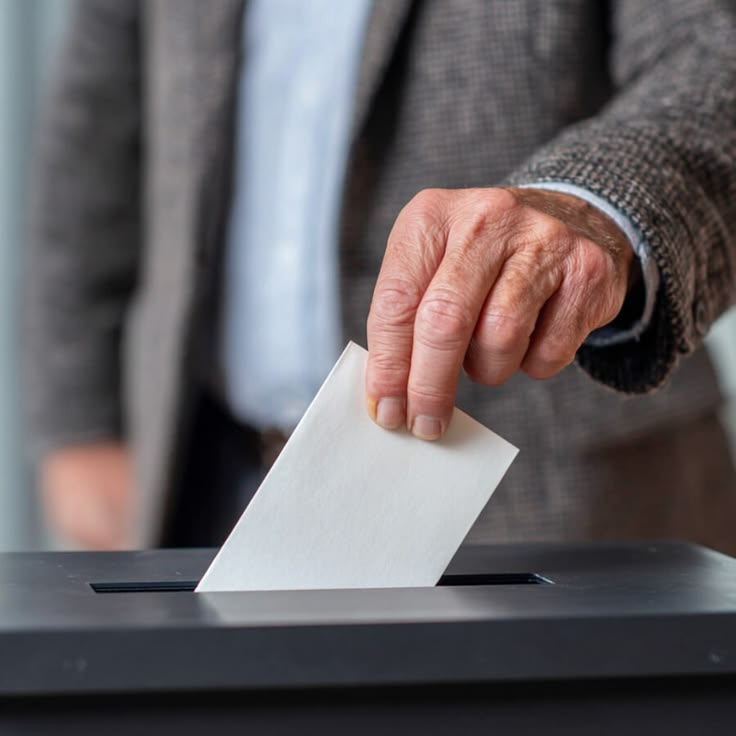
In many competitions, political activities and even some educational activities involve in voting. But the question remains: “Do our votes truly count, or does personality influence our choices more than merit?”
Let’s look at the recent Osun State governorship election.
Governor Ademola Adeleke won a second term after leaving the Peoples Democratic Party (PDP), the party under which he originally became governor, and joining the Accord Party. Despite changing parties shortly before the election, he won 19 out of the 30 local government areas and defeated his APC opponent by about 66,000 votes.
The result raises an important question: “Are voters becoming more attached to individual politicians than to the political parties they represent?”
Political parties may be becoming less influential in Nigerian politics, while personality, popularity and incumbency appear to be playing a greater role.
This is also evident in the presidential system. In the past and present, political discussions have often focused heavily on individuals and not their manifestoes and plans. We could talk about tribalism, corruption and favouritism, but these issues are so broad that we may never finish discussing them. What is even more concerning is that some forms of corruption appear to be becoming normalised in society.
When allegations of electoral malpractice arise, why do some people remain silent when the politician involved is someone they support? Could our attachment to individuals be part of the reason?
These issues have led me to question whether our votes are truly being used to achieve the purpose of democracy.
What, then, is the way forward?
“Should the country abandon the traditional system of voting?”
“Should voting become entirely virtual?”
“Or should judges and political experts who are considered objective choose our political leaders for us?”
None of these should replace the people’s right to choose their leaders. The solution begins with us as individuals.
We are part of the reason our voting system does not always produce the results we desire.
It all begins with one person. Then it spreads, and eventually, society begins to accept negative practices as normal.
Some individuals choose who they want in power because of their religion, ethnicity, tribe or personal benefits they receive from them.
This is a call to citizens: let your reason for choosing a leader be valid and well-founded. Let it be strong enough to go beyond personalities. Look beyond individuals and political parties and consider leaders who can genuinely contribute to making the country better. Such leaders may not belong to the most prominent political party.
Leave the campaign gifts and temporary benefits. Think about the people you are choosing. When they get into power, what will they do for the people? Don’t allow the small benefits you receive before an election to determine the future of millions of people.
Our votes have power. But that power only matters when we use it wisely.
The question is not just whether our votes count, but whether we are making our votes count.